
ECLIPSE OF A NEW ORDER
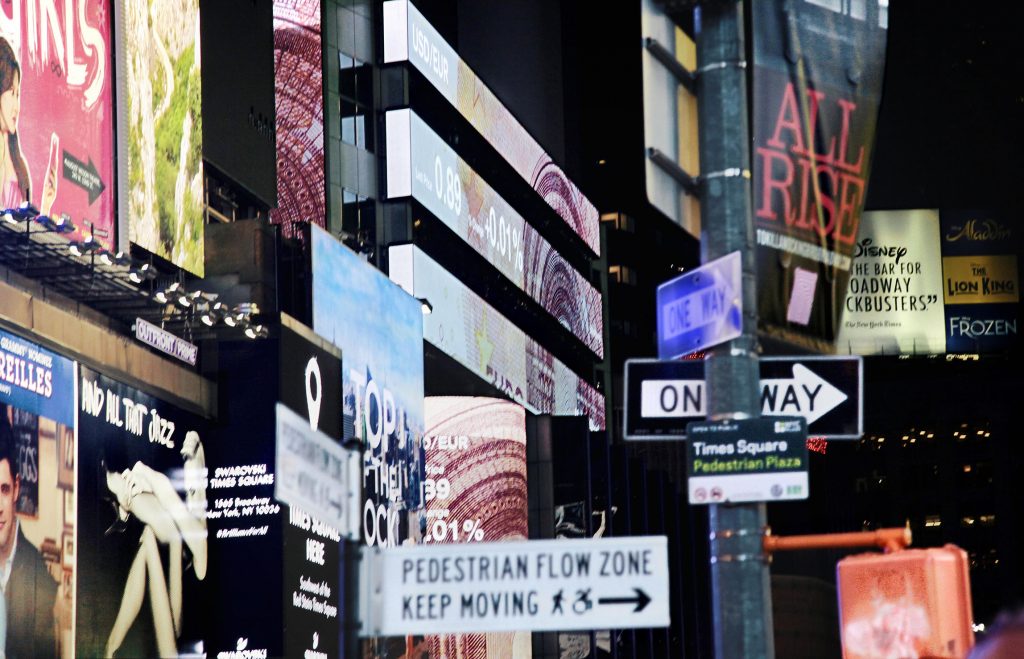
Perspective of a New Order · Metrópolis series
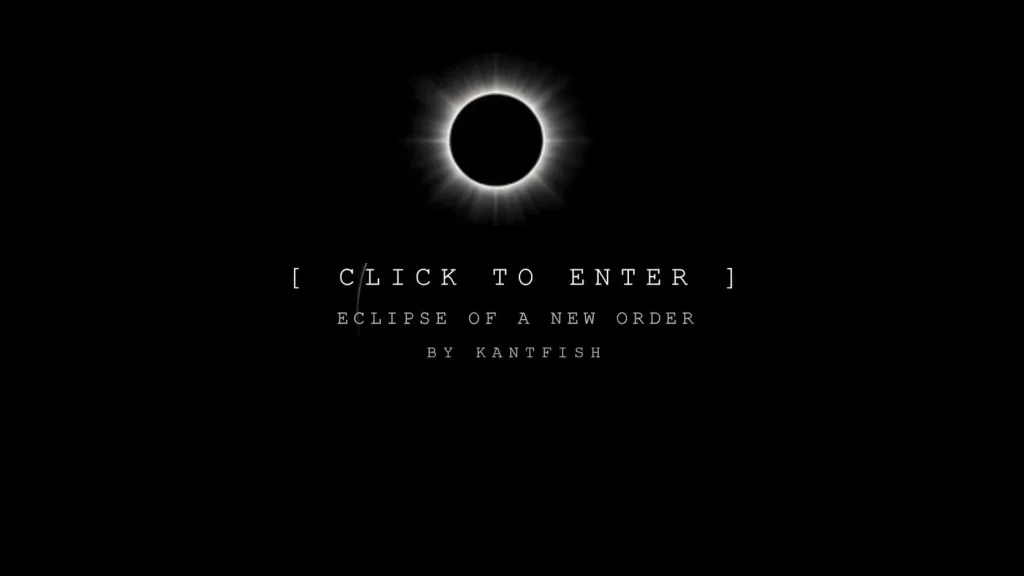
ECLIPSE OF A NEW ORDER
The artwork
Developed from Perspective of a New Order, presented at The Wrong Biennale, Eclipse of a New Order continues an investigation into contemporary systems of perception.
The metropolis has reached a point where the excess of signals, information and instructions no longer produces understanding but automatic behaviour.
What becomes possible when we recognize that noise and begin to silence it within ourselves?
The eclipse creates a brief condition in which attention can shift away from the continuous pressure of the system.
Through observation and a renewed identification with our own nature, the interruption becomes an occasion for inward reflection and for questioning the identity that the surrounding system continuously constructs.
Rather than illustrating the eclipse, the piece accompanies this transition from external noise towards another condition of perception.
Everything may return exactly as before. Or not.
Eclipse of a New Order begins with a photograph. A single image of Times Square taken from the wrong side. Not the postcard. Not the angle everyone knows. The reverse side of the spectacle. What looks like a collage is a photograph. What looks like order is a system on the verge of collapse.
The artwork does not add narrative to the image. It adds time. And an eclipse.
The principle
There is a sign at the center of the photograph. It does not shout. It does not stand out. It is almost buried beneath layers of advertising, financial data and Broadway neon. It reads:
PEDESTRIAN FLOW ZONE — KEEP MOVING.
Urban signage. An everyday command nobody reads because everybody obeys.
During the eclipse, that sign follows its own instruction for the first time.
The city that never stops, stops. Not by choice. Not through collapse. Because something larger than itself commands it.
KEEP MOVING obeys.
The original image
Perspective of a New Order is a photograph Kantfish took while looking where nobody looks. The result is an image too dense, too simultaneous, too real to seem real. The stock exchange beside jazz, beside Disney, beside an arrow indicating direction. Everything happens at once.
What the image does not do is show chaos. It demonstrates that chaos has an aesthetic.
That it is attractive. That it enters through the eyes before you can decide whether you want to see it.
Confusion becomes clearer than order. And once that happens, the balance you thought you saw disappears.
Perspective of a New Order belongs to the Metrópolis series, a project in which Kantfish examines how urban symbols of success and progress become distorted mirrors of the human condition. What once represented aspiration now reveals emptiness. What seemed like order reveals itself as fluctuation.
The piece
On August 12, 2026, a URL exists. Only that day. Only for those 24 hours.
Whoever arrives encounters the city. A short loop, almost static, where nothing moves much and everything moves slightly. Micro-vibrations. Asynchronous flickers. Every layer of the image has its own frequency and its own behaviour, as if the neon signs, billboards and financial tickers were breathing separately without knowing the others exist. The pressure does not come from visual violence. It comes from saturation. From being inside something that never stops.
At 18:28, the partial eclipse begins over Portugal. The city continues exactly the same. But something starts to change, so slowly it becomes impossible to know when it began. The brightness of the image increases over 62 minutes, almost imperceptibly. Like a fever rising before the body notices it is too late.
At 19:30, maximum eclipse. The image turns completely white. The city disappears into its own light.
For 26 seconds, another image appears. The moon with fireworks. It is not darkness that arrives, but another light. Strange, ambiguous, festive.
At 19:30:26, the city returns. The brightness decreases over 53 minutes, as slowly as it rose. At 20:23, the eclipse ends in the real sky and on the screen at exactly the same moment. The loop resumes. The city, as if nothing had happened.
At 23:59, black.
26 seconds
The duration of those 26 seconds is not an artistic decision. It is the eclipse itself. Twenty-six seconds is the real duration of totality visible from northeastern Portugal. Kantfish did not choose that number. He respected it.
Art is said to have its own time. Here, time belongs to the cosmos.
Technical Sheet
Title: Eclipse of a New Order
Author: Kantfish
Year: 2026
Format: 24-hour web artwork
Access: Unique URL active on August 12, 2026: eclipse.artkantfish.com
Base image: Perspective of a New Order, photograph from the Metrópolis series
Synchronized event: Partial solar eclipse, maximum at 19:30 WEST, Portugal
Totality duration: 26 seconds, northeastern Portugal
Produced in: Portugal
Presented at: The Wrong Eclipse 2026
TECHNICAL NOTE
demo-eclipse.artkantfish.com
Daily simulation artwork for curatorial preview running with identical temporal parameters and the complete 24 hour structure.
eclipse.artkantfish.com
Live artwork currently counting down to August 12, 2026, when the system activates and unfolds in real time.
TECHNICAL EXECUTION NOTE
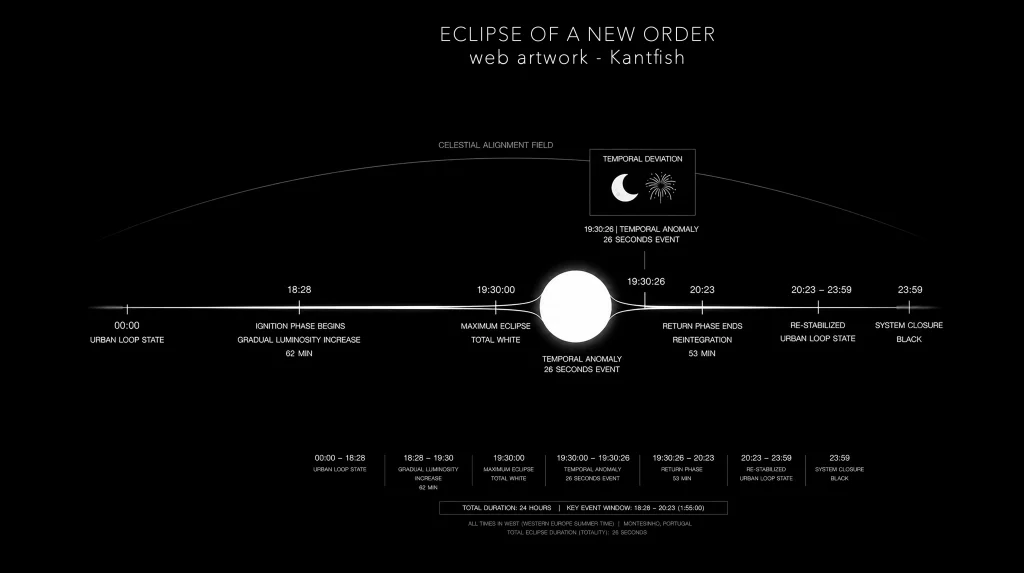
Eclipse of a New Order operates as a 24-hour web system synchronized with a real solar eclipse on August 12, 2026.
The system unfolds through timed perceptual states within a single URL.
00:00–18:28 urban loop state
18:28–19:30 gradual luminosity increase
19:30 maximum eclipse state
19:30:26 anomalous image event
19:30:26–20:23 return phase
20:23–23:59 re-stabilized urban loop state
23:59 system closure
This structure is only fully experienced in real time.
Artwork edition
Following its live activation on August 12, 2026, Eclipse of a New Order is available as a limited artwork edition.
Each edition includes:
• the complete executable web artwork
• audiovisual master files
• archival documentation of the live activation
• the blockchain-based digital certificate of authenticity
• installation protocol
The artwork is intended for long-term preservation and future exhibition while maintaining its original temporal structure and conceptual integrity.
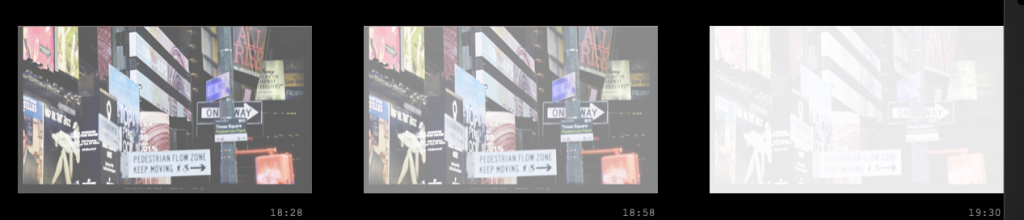
Web artwork, HTML/CSS/JavaScript - Eclipse of a Nerw Order
La obra
Desarrollada a partir de Perspective of a New Order, presentada en The Wrong Biennale, Eclipse of a New Order continúa una investigación sobre los sistemas contemporáneos de percepción.
La metrópolis ha alcanzado un punto en el que el exceso de señales, información e instrucciones ya no produce comprensión, sino comportamiento automático.
¿Qué se hace posible cuando reconocemos ese ruido y comenzamos a silenciarlo dentro de nosotros?
El eclipse crea una breve condición en la que la atención puede desplazarse lejos de la presión continua del sistema.
A través de la observación y de una renovada identificación con nuestra propia naturaleza, la interrupción se convierte en una ocasión para la reflexión interior y para cuestionar la identidad que el sistema que nos rodea construye continuamente.
Más que ilustrar el eclipse, la obra acompaña esta transición desde el ruido exterior hacia otra condición de la percepción.
Todo puede volver exactamente a ser como antes.
O no.
Eclipse of a New Order comienza con una fotografía. Una única imagen de Times Square tomada desde el lado equivocado. No la postal. No el ángulo que todo el mundo conoce. El reverso del espectáculo. Lo que parece un collage es una fotografía. Lo que parece orden es un sistema al borde del colapso.
La obra no añade una narrativa a la imagen. Añade tiempo. Y un eclipse.
El principio
Hay una señal en el centro de la fotografía. No grita. No destaca. Está casi enterrada bajo capas de publicidad, datos financieros y neones de Broadway. Dice:
PEDESTRIAN FLOW ZONE — KEEP MOVING
Señalización urbana. Una orden cotidiana que nadie lee porque todos la obedecen.
Durante el eclipse, esa señal sigue su propia instrucción por primera vez.
La ciudad que nunca se detiene, se detiene. No por decisión propia. No por un colapso. Porque algo más grande que ella misma la gobierna.
KEEP MOVING obedece.
La imagen original
Perspective of a New Order es una fotografía que Kantfish tomó mirando donde nadie mira. El resultado es una imagen demasiado densa, demasiado simultánea, demasiado real para parecer real. La bolsa junto al jazz, junto a Disney, junto a una flecha que indica una dirección. Todo sucede al mismo tiempo.
Lo que la imagen hace no es mostrar el caos. Demuestra que el caos tiene una estética. Que resulta atractivo. Que entra por los ojos antes de que puedas decidir si quieres verlo.
La confusión se vuelve más clara que el orden. Y cuando eso ocurre, el equilibrio que creías ver desaparece.
Perspective of a New Order pertenece a la serie Metrópolis, un proyecto en el que Kantfish examina cómo los símbolos urbanos del éxito y del progreso se convierten en espejos distorsionados de la condición humana. Lo que antes representaba aspiración ahora revela vacío. Lo que parecía orden se revela como fluctuación.
La pieza
El 12 de agosto de 2026 existe una URL. Solo ese día. Solo durante esas veinticuatro horas.
Quien llega se encuentra con la ciudad. Un breve bucle, casi estático, donde nada se mueve demasiado y todo se mueve ligeramente. Microvibraciones. Parpadeos asíncronos. Cada capa de la imagen tiene su propia frecuencia y su propio comportamiento, como si los neones, las vallas publicitarias y los indicadores financieros respiraran por separado sin saber que los demás existen. La presión no proviene de la violencia visual. Proviene de la saturación. De permanecer dentro de algo que nunca se detiene.
A las 18:28, comienza el eclipse parcial sobre Portugal. La ciudad continúa exactamente igual. Pero algo empieza a cambiar, tan lentamente que resulta imposible saber cuándo comenzó. El brillo de la imagen aumenta durante 62 minutos, casi imperceptiblemente. Como una fiebre que asciende antes de que el cuerpo se dé cuenta de que ya es demasiado tarde.
A las 19:30, eclipse máximo. La imagen se vuelve completamente blanca. La ciudad desaparece dentro de su propia luz.
Durante 26 segundos, aparece otra imagen. La luna con fuegos artificiales. No es la oscuridad lo que llega, sino otra luz. Extraña, ambigua, festiva.
A las 19:30:26, la ciudad regresa. El brillo disminuye durante 53 minutos, tan lentamente como había aumentado. A las 20:23, el eclipse termina en el cielo real y en la pantalla exactamente al mismo tiempo. El bucle se reanuda. La ciudad, como si no hubiera pasado nada.
A las 23:59, negro.
26 segundos
La duración de esos 26 segundos no es una decisión artística. Es el propio eclipse. Veintiséis segundos es la duración real de la totalidad visible desde el noreste de Portugal. Kantfish no eligió ese tiempo. Lo respetó.
Se suele decir que el arte tiene su propio tiempo.
Aquí, el tiempo pertenece al cosmos.
Ficha técnica
Título: Eclipse of a New Order
Autor: Kantfish
Año: 2026
Formato: Obra web de 24 horas
Acceso: URL única activa el 12 de agosto de 2026: eclipse.artkantfish.com
Imagen base: Perspective of a New Order, fotografía de la serie Metrópolis
Evento sincronizado: Eclipse parcial de Sol, máximo a las 19:30 WEST, Portugal
Duración de la totalidad: 26 segundos, noreste de Portugal
Producido en: Portugal
Presentado en: The Wrong Eclipse 2026
NOTA TÉCNICA
demo-eclipse.artkantfish.com
Obra de simulación diaria para previsualización curatorial, ejecutada con parámetros temporales idénticos y la estructura completa de 24 horas.
eclipse.artkantfish.com
Obra en vivo que actualmente muestra la cuenta atrás hasta el 12 de agosto de 2026, cuando el sistema se activa y se despliega en tiempo real.
NOTA DE EJECUCIÓN TÉCNICA
Eclipse of a New Order funciona como un sistema web de 24 horas sincronizado con un eclipse solar real el 12 de agosto de 2026.
El sistema se despliega a través de estados perceptivos temporizados dentro de una única URL.
00:00–18:28 · Estado de bucle urbano
18:28–19:30 · Incremento gradual de la luminosidad
19:30 · Estado de eclipse máximo
19:30:26 · Evento de imagen anómala
19:30:26–20:23 · Fase de retorno
20:23–23:59 · Estado de bucle urbano reestabilizado
23:59 · Cierre del sistema
Esta estructura solo puede experimentarse plenamente en tiempo real.
Edición de la obra
Tras su activación en directo el 12 de agosto de 2026, Eclipse of a New Order estará disponible como una edición limitada.
Cada edición incluye:
• la obra web ejecutable completa
• los archivos maestros audiovisuales
• la documentación archivística de la activación en directo
• el certificado digital de autenticidad en blockchain
• el protocolo de instalación
La obra está destinada a su conservación a largo plazo y a futuras exposiciones, preservando al mismo tiempo su estructura temporal original y su integridad conceptual.
A obra
Desenvolvida a partir de Perspective of a New Order, apresentada na The Wrong Biennale, Eclipse of a New Order dá continuidade a uma investigação sobre os sistemas contemporâneos de perceção.
A metrópole atingiu um ponto em que o excesso de sinais, informação e instruções já não produz compreensão, mas comportamento automático.
O que se torna possível quando reconhecemos esse ruído e começamos a silenciá-lo dentro de nós?
O eclipse cria uma breve condição em que a atenção pode libertar-se da pressão contínua do sistema.
Através da observação e de uma renovada identificação com a nossa própria natureza, essa interrupção transforma-se numa oportunidade de reflexão interior e de questionamento da identidade que o sistema à nossa volta constrói continuamente.
Em vez de ilustrar o eclipse, a obra acompanha esta transição do ruído exterior para uma outra condição de perceção.
Tudo pode regressar exatamente como antes. Ou não.
Eclipse of a New Order começa com uma fotografia. Uma única imagem de Times Square captada a partir do lado errado. Não o postal. Não o ângulo que todos conhecem. O verso do espetáculo. Aquilo que parece uma colagem é uma fotografia. Aquilo que parece ordem é um sistema à beira do colapso.
A obra não acrescenta narrativa à imagem. Acrescenta tempo. E um eclipse.
O princípio
Existe um sinal no centro da fotografia. Não grita. Não se destaca. Está quase enterrado sob camadas de publicidade, dados financeiros e néons da Broadway. Diz:
PEDESTRIAN FLOW ZONE — KEEP MOVING
Sinalética urbana. Uma instrução quotidiana que ninguém lê porque toda a gente obedece.
Durante o eclipse, esse sinal segue, pela primeira vez, a sua própria instrução.
A cidade que nunca para, para. Não por escolha. Não por colapso. Porque algo maior do que ela própria a comanda.
KEEP MOVING obedece.
A imagem original
Perspective of a New Order é uma fotografia que Kantfish captou olhando para onde ninguém olha. O resultado é uma imagem demasiado densa, demasiado simultânea, demasiado real para parecer real. A bolsa de valores ao lado do jazz, ao lado da Disney, ao lado de uma seta que indica uma direção. Tudo acontece ao mesmo tempo.
Aquilo que a imagem não faz é mostrar o caos. Demonstra que o caos tem uma estética. Que é atraente. Que entra pelos olhos antes de podermos decidir se o queremos ver.
A confusão torna-se mais clara do que a ordem. E, quando isso acontece, o equilíbrio que julgávamos ver desaparece.
Perspective of a New Order pertence à série Metrópolis, um projeto em que Kantfish investiga a forma como os símbolos urbanos de sucesso e progresso se transformam em espelhos distorcidos da condição humana. Aquilo que antes representava aspiração revela agora vazio. Aquilo que parecia ordem revela-se flutuação.
A peça
No dia 12 de agosto de 2026, existe um URL. Apenas nesse dia. Apenas durante essas vinte e quatro horas.
Quem chega encontra a cidade. Um pequeno loop, quase estático, onde quase nada se move e tudo se move ligeiramente. Microvibrações. Cintilações assíncronas. Cada camada da imagem possui a sua própria frequência e o seu próprio comportamento, como se os néones, os painéis publicitários e os indicadores financeiros respirassem separadamente, sem saber que os outros existem. A pressão não nasce da violência visual. Nasce da saturação. De estar dentro de algo que nunca para.
Às 18:28, começa o eclipse parcial sobre Portugal. A cidade continua exatamente igual. Mas algo começa a mudar, tão lentamente que se torna impossível saber quando começou. A luminosidade da imagem aumenta ao longo de 62 minutos, quase impercetivelmente. Como uma febre que sobe antes de o corpo perceber que já é demasiado tarde.
Às 19:30, ocorre o máximo do eclipse. A imagem torna-se completamente branca. A cidade desaparece na sua própria luz.
Durante 26 segundos, surge outra imagem. A Lua com fogo de artifício. Não é a escuridão que chega, mas outra luz. Estranha, ambígua, festiva.
Às 19:30:26, a cidade regressa. A luminosidade diminui ao longo de 53 minutos, tão lentamente quanto aumentou. Às 20:23, o eclipse termina no céu real e no ecrã exatamente no mesmo instante. O loop recomeça. A cidade, como se nada tivesse acontecido.
Às 23:59, negro.
26 segundos
A duração desses 26 segundos não é uma decisão artística. É o próprio eclipse. Vinte e seis segundos correspondem à duração real da totalidade visível no nordeste de Portugal. Kantfish não escolheu esse número. Limitou-se a respeitá-lo.
Costuma dizer-se que a arte tem o seu próprio tempo. Aqui, o tempo pertence ao cosmos.
Ficha técnica
Título: Eclipse of a New Order
Autor: Kantfish
Ano: 2026
Formato: Web artwork de 24 horas
Acesso: URL único ativo no dia 12 de agosto de 2026: eclipse.artkantfish.com
Imagem de base: Perspective of a New Order, fotografia da série Metrópolis
Evento sincronizado: Eclipse solar parcial, máximo às 19:30 (WEST), Portugal
Duração da totalidade: 26 segundos, nordeste de Portugal
Produzido em: Portugal
Apresentado em: The Wrong Eclipse 2026
NOTA TÉCNICA
demo-eclipse.artkantfish.com
Simulação diária da artwork para pré-visualização curatorial, executada com parâmetros temporais idênticos e com a estrutura completa de 24 horas.
eclipse.artkantfish.com
Artwork em direto, atualmente em contagem decrescente para o dia 12 de agosto de 2026, quando o sistema será ativado e se desenvolverá em tempo real.
NOTA SOBRE A EXECUÇÃO TÉCNICA
Eclipse of a New Order funciona como um sistema web de 24 horas sincronizado com um eclipse solar real no dia 12 de agosto de 2026.
O sistema desenvolve-se através de diferentes estados percetivos temporizados dentro de um único URL.
00:00–18:28 Estado de loop urbano
18:28–19:30 Aumento gradual da luminosidade
19:30 Estado de máximo do eclipse
19:30:26 Evento anómalo de imagem
19:30:26–20:23 Fase de regresso
20:23–23:59 Estado de loop urbano reestabilizado
23:59 Encerramento do sistema
Esta estrutura só pode ser plenamente experienciada em tempo real.